

Retrofit & Modernization
A Technical Reset, Not a Repair.
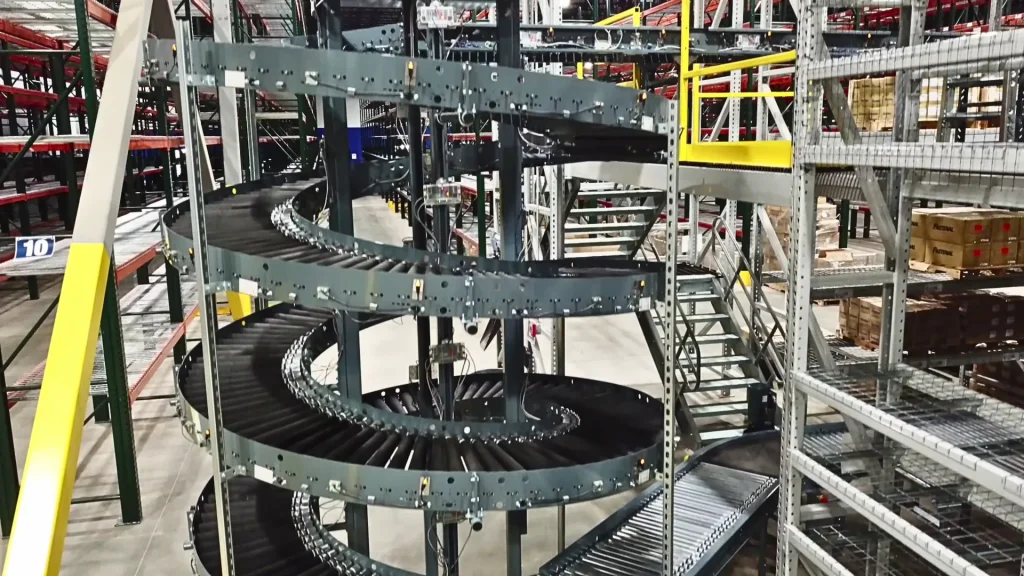
Retrofitting bridges your existing infrastructure and the performance modern material handling requires — without the capital cost or downtime of a full system replacement. We standardize retrofits on 24VDC MDR technology, which cuts spare parts complexity and preventive maintenance labor compared to legacy AC drive systems, and we design and fabricate every retrofit in-house.
Why Modernize Now
Legacy 460VAC systems rarely fail all at once — they fail as an accumulating maintenance burden that eventually costs more than modernizing would have. Three signs your system has crossed that line:
The endless-loop maintenance cycle.
If your team is stuck lubricating chains, adjusting drive belts, and replacing pulleys on a recurring basis, that mechanical overhead is unsustainable. 24VDC MDR eliminates most of it — brushless, internal planetary gearboxes and modular zones mean far fewer wear components to maintain.
Mechanical resonance and fatigue.
Component wear in legacy AC systems leads to drive-train misalignment, which creates a feedback loop: vibration and grinding round out hex holes and wear out bearing races, which increases vibration further. 24VDC MDR’s programmable acceleration — torque delivered on demand rather than a hard start — largely eliminates the mechanical “jerk” that drives this cycle.
Safety and compliance exposure.
Aging 460VAC systems carry real entanglement risk. 24VDC MDR is inherently hand-safe: intelligent controllers use real-time current limiting to stop a motor instantly on obstruction, while still delivering enough tangential force — additive across many rollers — to move hundreds to thousands of pounds of product.
Legacy parts obsolescence.
When a system depends on components that are increasingly hard to source, every repair becomes a search instead of a straightforward fix. This is a common trigger for modernization on its own — a facility doesn’t decide to retrofit until a part they need simply isn’t available anymore. We supply spare parts for legacy Interlake LS-500 lineshaft conveyor specifically, so if that’s part of what’s aging in your facility, parts sourcing doesn’t have to be the thing that forces the decision.
Tribal knowledge and workforce risk.
Older AC and lineshaft systems often run on institutional knowledge — the one technician who’s kept a line running for twenty years knows things that were never written down anywhere. When that person retires or leaves, the system doesn’t get easier to maintain, it gets riskier. 24VDC MDR’s standardized, documented architecture doesn’t depend on any single person’s memory.
What this actually costs you.
Unplanned downtime on an aging line typically runs [NEED SPEC: $/hour or $/incident, if you have a defensible industry figure or your own project data] — and maintenance spend on a system in the “endless loop” phase tends to climb
Our Approach
Legacy 460VAC systems typically fail at specific friction points, not everywhere at once. Our approach targets those bottlenecks directly, restoring system-wide throughput without a full infrastructure overhaul.
Drive Technology: 460VAC to 24VDC
We replace high-maintenance AC motors and lineshafts with 24VDC MDR, cutting mechanical complexity while improving safety.
Mechanical Integrity
We restore system reliability at the component level — replacing failing rollers, filling worn hex holes, and removing unnecessary components — to extend the usable life of your existing structural infrastructure.
Control System Logic Modernization
We migrate aging controls to decentralized, Ethernet-based architecture — Modbus TCP, EtherNet/IP, or Profinet — for direct integration with your WCS or WMS. This provides zone-level telemetry legacy PLCs can't see: motor current draw (mA), internal temperature (°C), and electrical frequency (Hz), enabling predictive diagnostics rather than reactive troubleshooting.
Beyond the Conveyor Itself
Modernizing has ripple effects worth planning for early. Removing large centralized AC drives can free up electrical panel capacity elsewhere in your facility. We flag this during the initial equipment review and coordinate directly with a licensed electrical engineering partner when panel capacity or service upgrades are part of the picture — so it gets addressed as part of one project, not a separate one you have to manage yourself.
Technical Performance
Torque and Power Delivery Traditional AC motors draw constant power regardless of load. 24VDC MDR delivers torque on demand through programmable ramping, eliminating the mechanical "jerk" and vibration that come with hard-starting AC motors — while maintaining a 100% duty cycle and drawing high-torque performance only when material is actually present.
Maintenance and Continuity Legacy systems depend on external drive belts, chains, lineshafts, and centralized motors — all single points of failure. 24VDC MDR distributes drive force across modular zones, isolating failures to a single zone and making maintenance faster and simpler.
Operational Environment High-voltage systems generate significant heat and ambient noise that can exceed 80 dB(A). 24VDC MDR runs at meaningfully lower noise and heat levels, improving both facility safety and the working environment — and reducing thermal stress on mechanical components over time.
Induction Retrofits
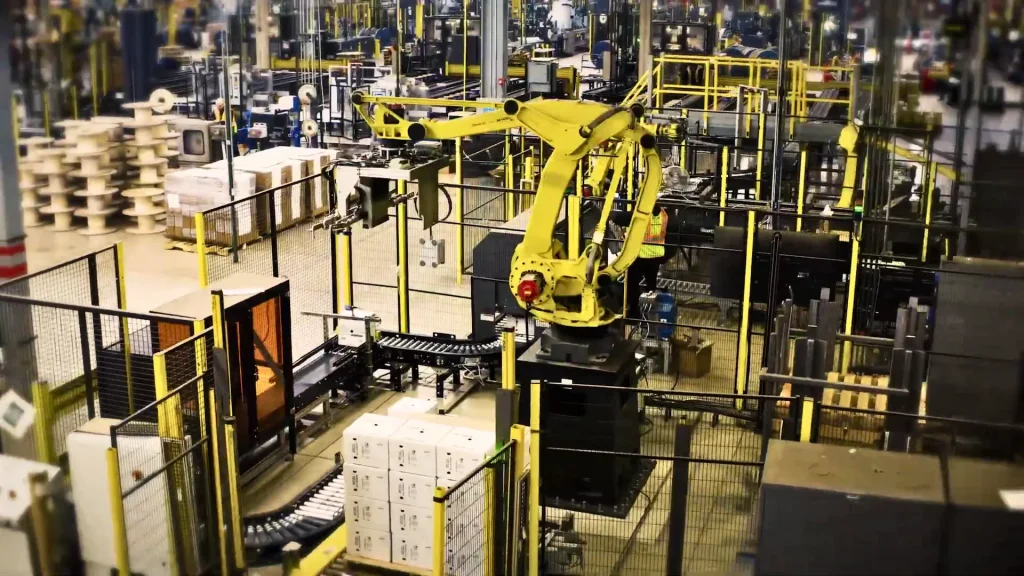
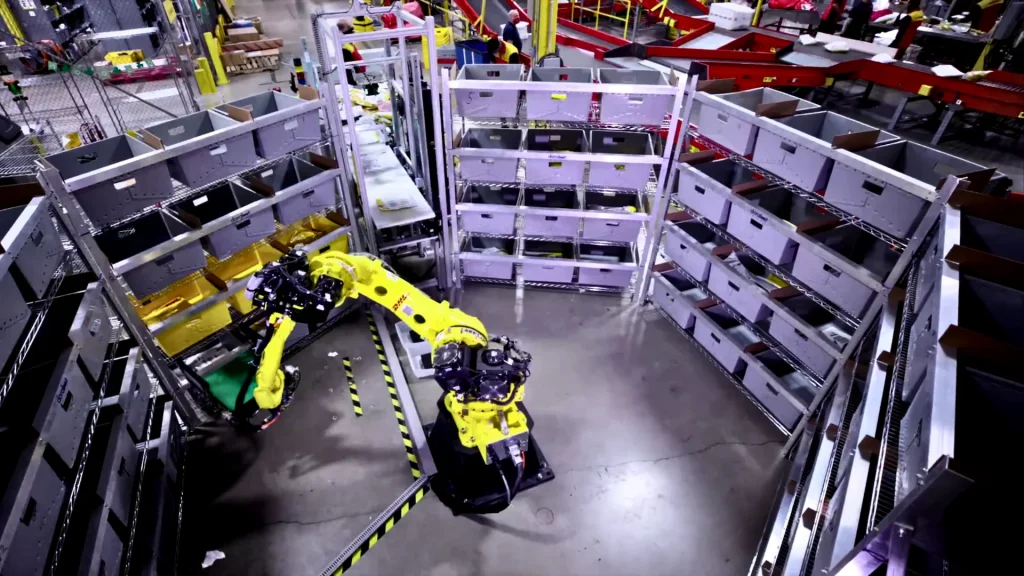
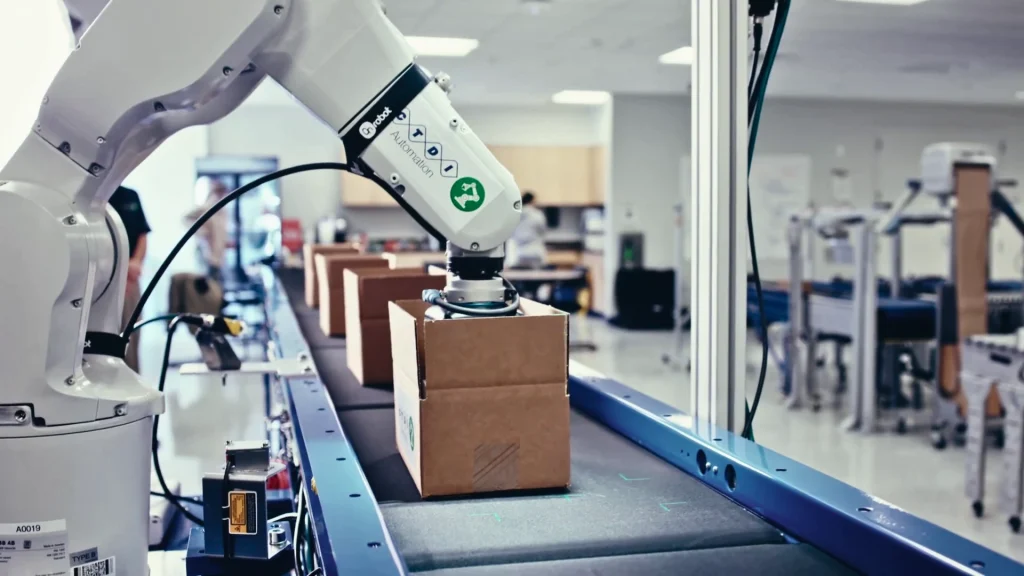
High-performance robotic picking and induction require more than raw speed. We specialize in retrofitting in-feed zones to deliver the singulation and spacing accuracy modern robot cells need to hit peak throughput.
The Role of In-Feed
The in-feed conveyor bridges bulk flow and precision induction — converting disorganized material into a perfectly spaced, singulated stream ready for robotic pick-and-place vision systems.
Common Failure Modes in Legacy Systems
Legacy 460VAC systems often suffer from “slug release” or mechanical creep, where motors don’t stop instantly. The result: parcel collisions, overlapping items that blind robotic cameras, and uneven gaps that cause the robot to miss cycles.
The High-Throughput Challenge
E-commerce and fulfillment operations often run in the millions of units per day. Legacy in-feed systems frequently lack the granularity to feed robots without errors or collisions at that volume.
Retrofit vs. Full Replacement
Modernization can extend the usable life of most infrastructure — but not all of it. Here's a transparent read on when a retrofit stops being the most cost-effective path, and a full replacement makes more sense.
Layout and Scalability Constraints When your operational demands require a fundamental change in material flow or density that your existing equipment can't physically accommodate, a custom-engineered new system — or a hybrid new-build/retrofit — is the only path to optimizing future throughput.
Component Incompatibility Some legacy mechanical components are specialized or outdated enough that they can't reliably integrate with modern MDR technology or controls, regardless of retrofit scope.
Cumulative Cost When the cost of a targeted drive conversion and modernization retrofit approaches the cost of a new, precision-engineered system, we'll advise a replacement strategy — so you get the full economic and safety benefit of modern 24VDC technology rather than paying retrofit-plus-eventual-replacement costs twice.
Either way, the starting point is the same: one audit, one team, and a straight recommendation — retrofit, replacement, or hybrid — based on your actual system, not the answer that's easiest for us to sell.
Working With Us
Equipment & CAD Review
We familiarize ourselves with your current system and conveyor assets to identify and validate high-impact retrofit zones.
Controls and Logic Review
We evaluate your existing PLC architecture and WCS/WMS integration to ensure new decentralized logic provides full system visibility, and help determine whether your operation needs Full ZPA for automatic material handling or Full PLC Control for specialized logic.
Custom Engineering and Layout Mapping
We match motor torque and internal planetary gearbox ratios to your specific load profiles, and design precision-fit transitions and bracketry as needed to extend the usable life of your existing equipment.
Procurement & In-House Fabrication
We source components and fabricate custom brackets, transitions, and mounting hardware in-house before installation begins so your retrofit isn’t waiting on a third-party’s schedule
Phased Installation & Cutover
We coordinate with your team to identify peak hours and critical lines, then sequence installation around them. We work after normal shifts or on weekends as needed to keep interruption to your operation to an absolute minimum.
Testing & Commissioning
Prior to signoff, we verify functionality, product flow, and control logic.
Ongoing Support & Continuity
We stay a persistent presence after commissioning. We provide ongoing support for troubleshooting, spare parts, and anything else that might come up as the system runs.
Ready to Modernize?
Whether you’re targeting a single bottleneck or planning a full infrastructure reset, our team audits your current system first and recommends the right scope — not the largest one.