

Integrated System Design
Engineering Without Limitations
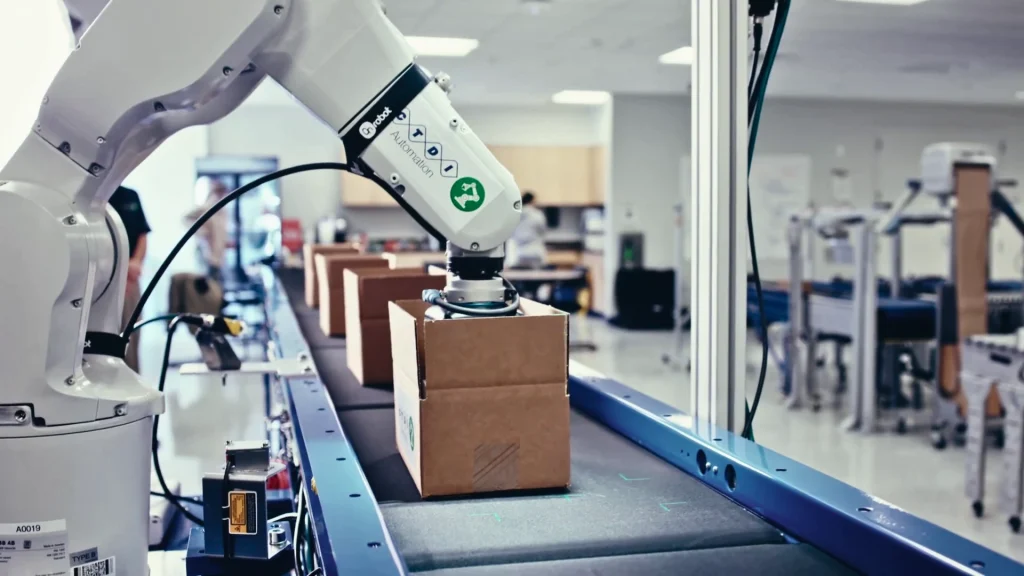
Standard conveyor catalogs force compromises: fixed footprints, fixed load ratings, fixed integration points. We don’t work from a catalog. Every system is custom-engineered in CAD, then fabricated in our own shop to match your floor plan, your throughput target, and your product mix — not the nearest standard part number.
Applications for High-Performance Flow
Whether you’re fitting a system into a tight, non-standard footprint or scaling a high-velocity distribution center, custom engineering means the conveyor adapts to your facility — not the other way around.
Conveyor Configurations
Best Use Case:
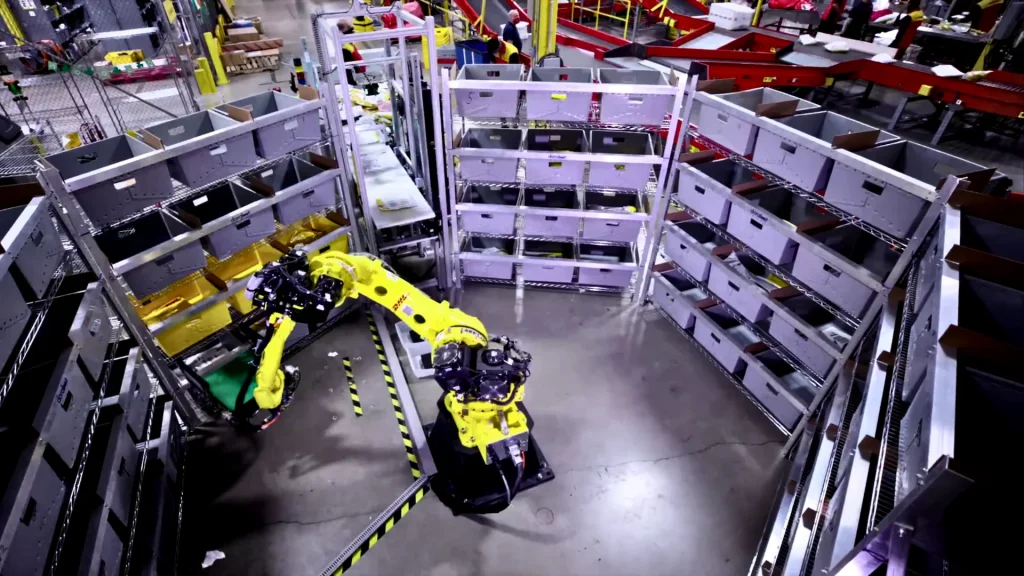
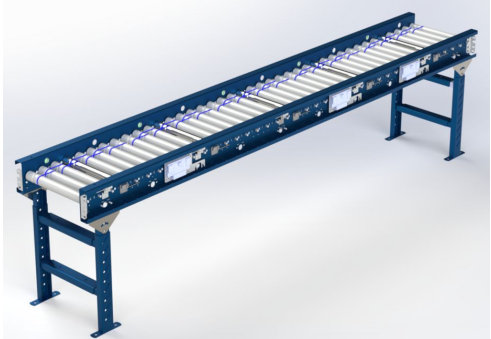
Zone-to-zone transport and accumulation where product needs to stop, buffer, and release without contacting adjacent items — parcel singulation, tote handling, induction into sortation or robotic cells.
Key Advantages:
- Zero-pressure accumulation — each zone stops product independently, no product-on-product contact
- Run-on-demand zoning — rollers energize only when product is present, reducing motor runtime versus fixed-speed belt
- Distributed 24VDC motors isolate failures to a single zone instead of stopping the full line
- Low-voltage design simplifies lockout/tagout during maintenance
Best Use Case:
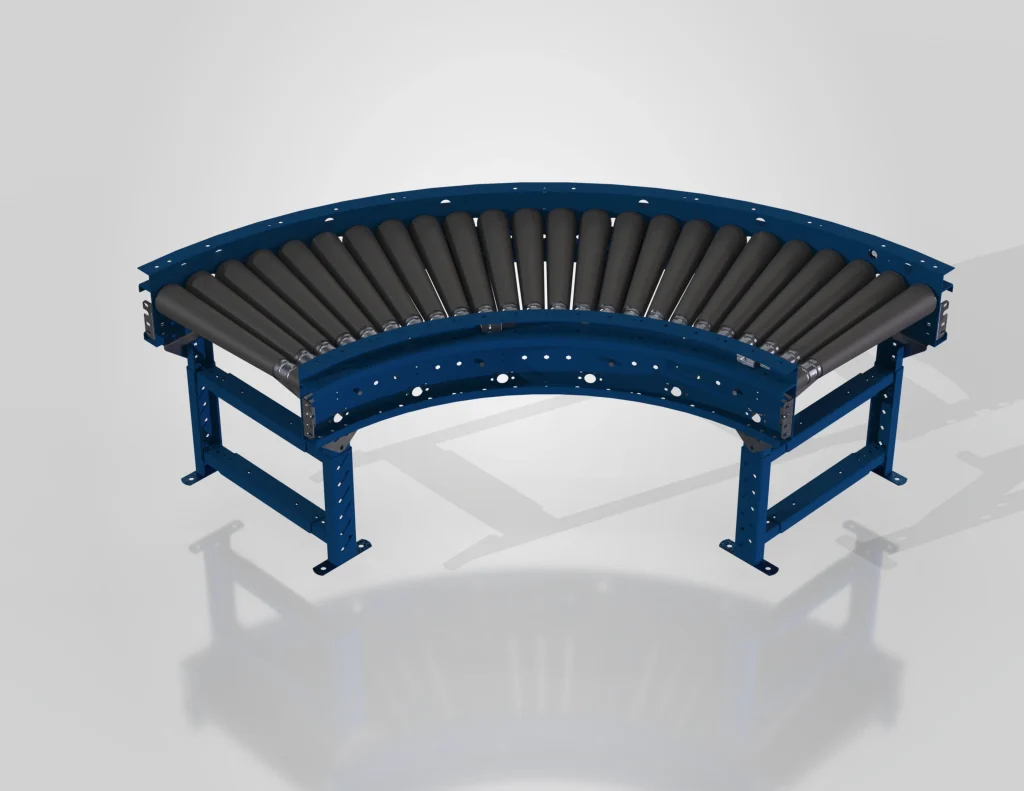
Directional changes — 30°, 45°, and 90° turns — within a zero-pressure accumulation line, without breaking zone control or introducing product slippage.
Key Advantages:
- Tapered or differential-speed rollers maintain product orientation through the turn
- Maintains ZPA zone logic through the curve — no dead zones or pressure buildup at transitions
- Matches straight MDR zone control, so the line reads as one continuous system rather than a belt-to-roller handoff
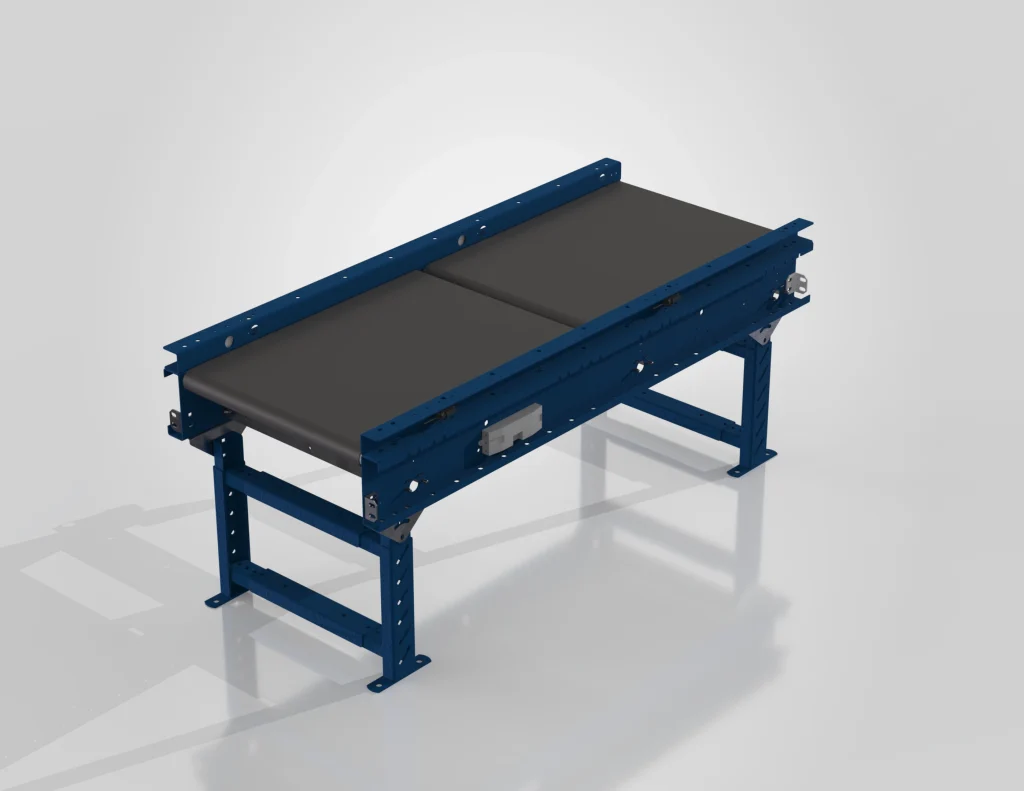
Best Use Case:
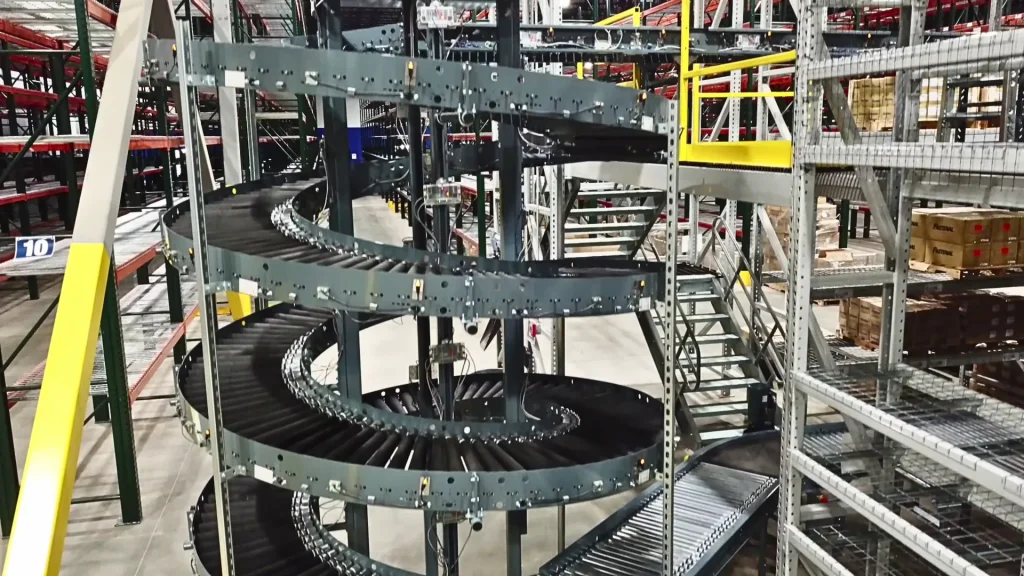
Products with irregular, unstable, or small-footprint bottoms that can’t reliably ride on open rollers — poly bags, small cartons, uneven pallets of mixed SKUs, or transitions at inclines and declines.
Key Advantages:
- Continuous belt surface eliminates gaps that catch narrow or flexible product
- Higher friction surface supports incline/decline transport without slippage
- Bridges accumulation zones and non-conveyable product types without a separate handling system
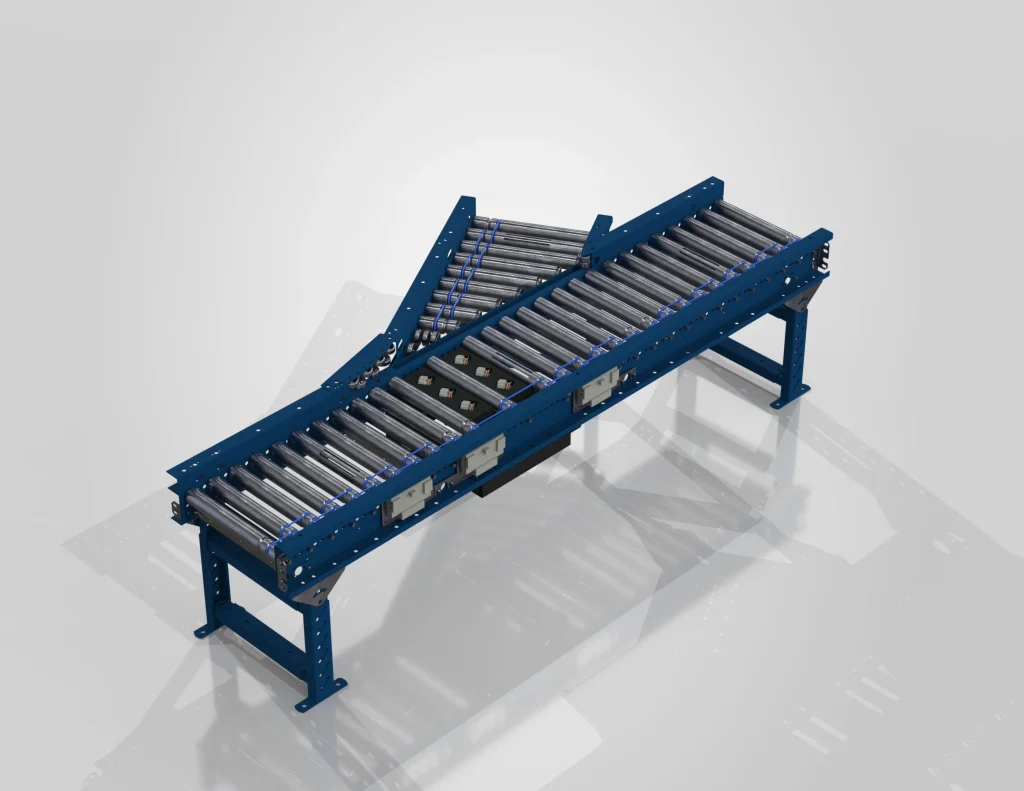
Best Use Case:
High-throughput diverting to multiple destinations — parcel sortation, order fulfillment lanes, returns/reverse logistics sorting.
Key Advantages:
- [NEED SPEC: sortation method(s) you offer — pop-up wheel, cross-belt, sliding shoe, narrow-belt — each has a different rate/gentleness tradeoff worth naming specifically]
- [NEED SPEC: rated sorts-per-minute or throughput capacity]
Integrates directly with upstream ZPA accumulation, so diverted product arrives singulated and spaced
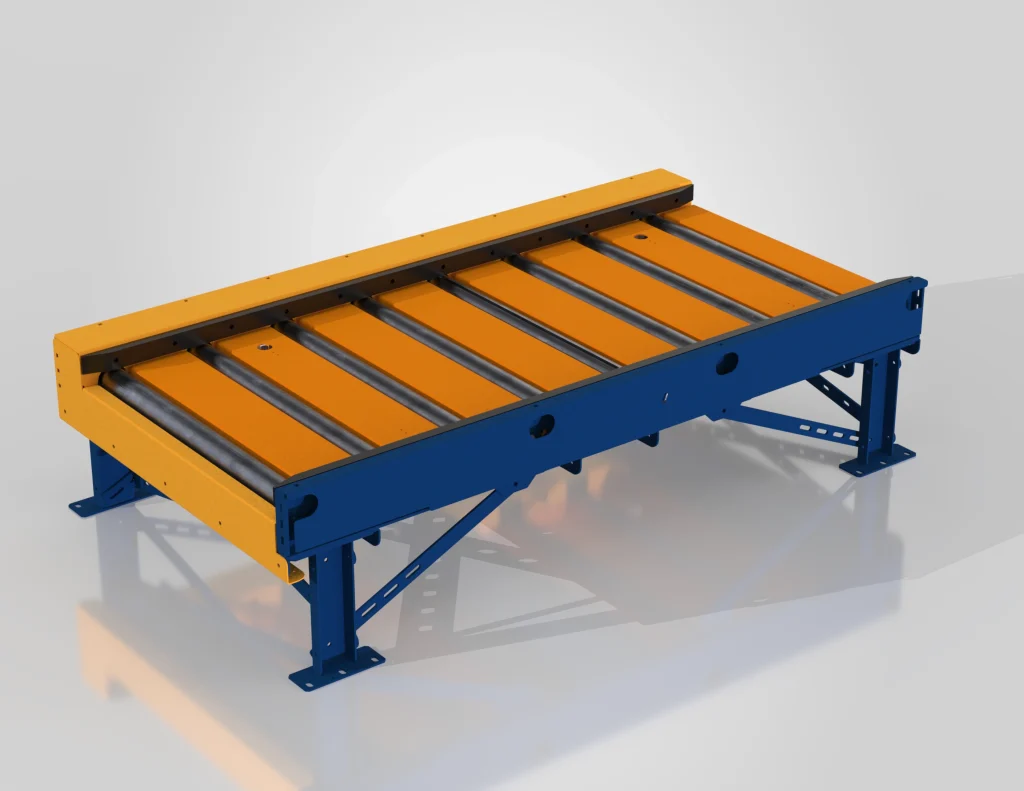
Best Use Case:
Heavy unit loads — palletized product, drums, heavy totes — where roller-driven MDR doesn’t have the load capacity.
Key Advantages:
- Rated for heavy unit loads beyond typical MDR capacity — [NEED SPEC: your rated load capacity per zone/roller]
- Chain-driven design withstands higher impact loading at induction points
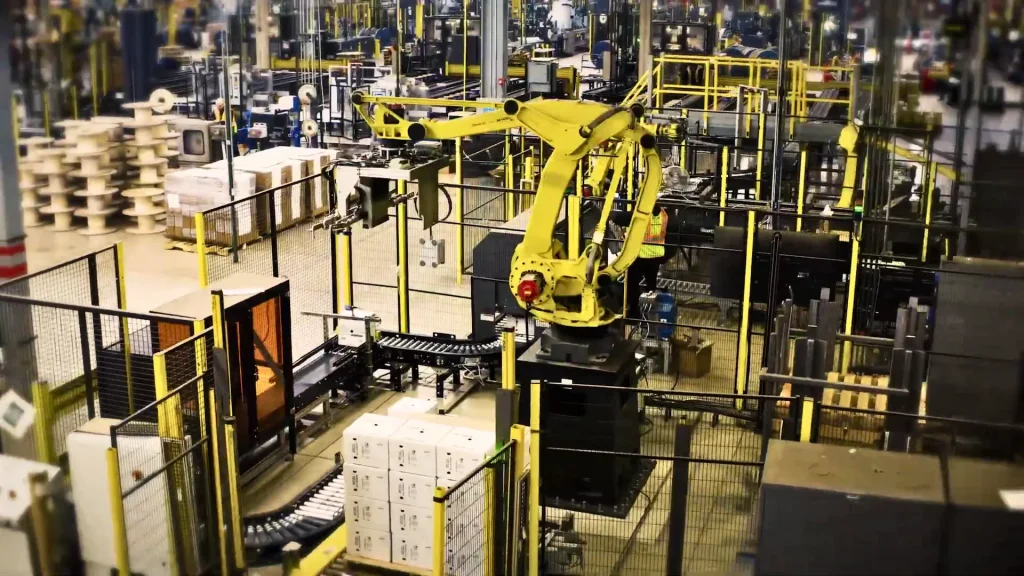
- Common in palletizing, depalletizing, and heavy-duty in-feed applications where product weight, not just throughput, drives the design
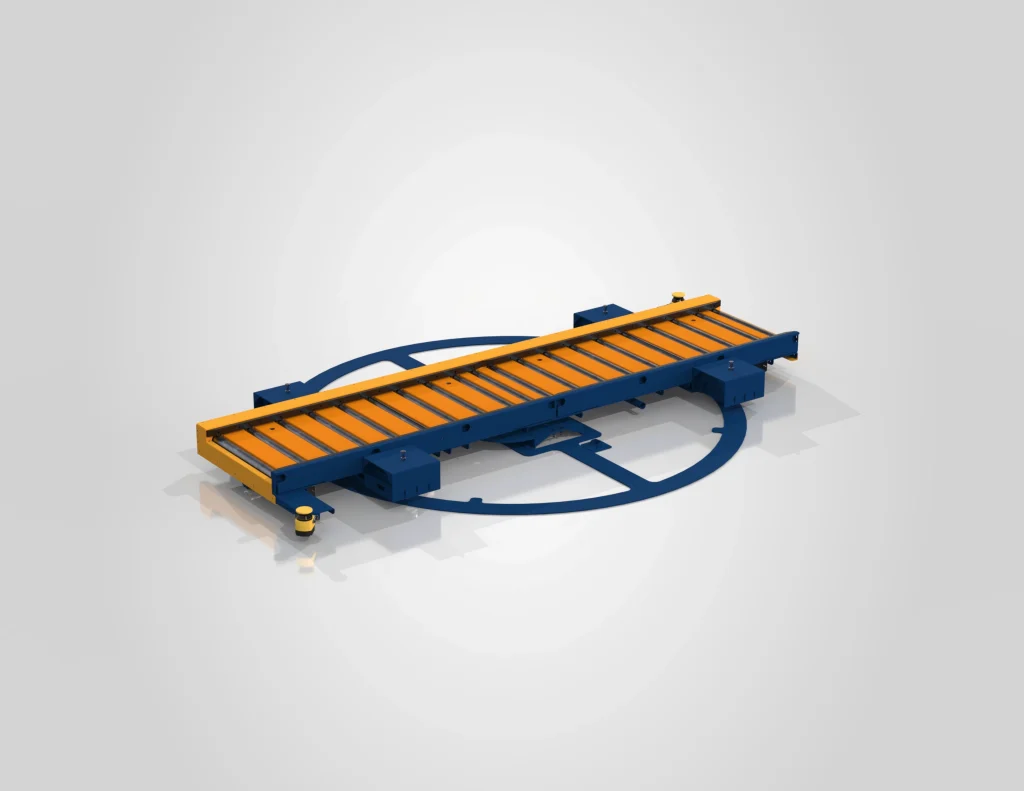
Best Use Case:
Applications that don’t fit a standard configuration — washdown environments, cold storage, non-standard product geometry, or integration with existing legacy equipment during a retrofit.
Key Advantages:
- Engineered and fabricated in-house, so non-standard requirements don’t require a third-party subcontractor or custom quote cycle
- Same design and fabrication team handles the custom build as the standard product line — no handoff to a separate engineering group
- Built to integrate into existing facility constraints rather than requiring facility modification
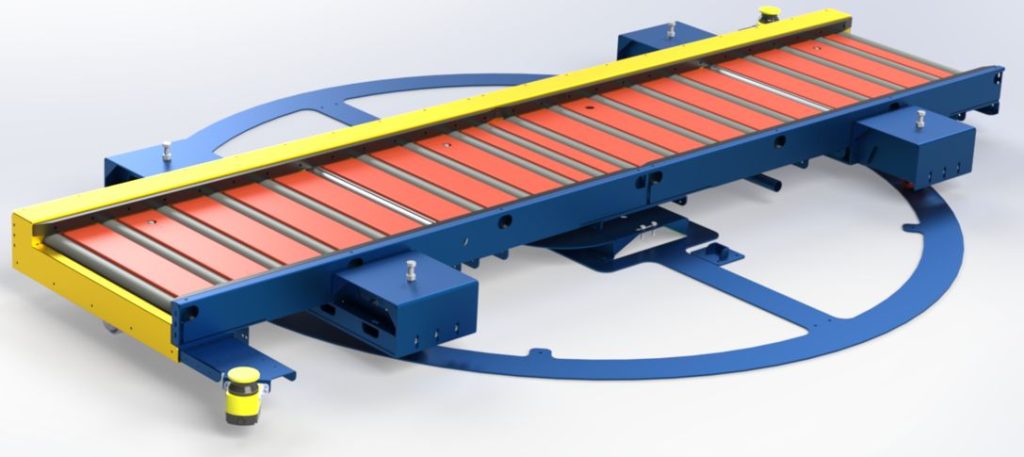
Best Use Case:
Lorem ipsum dolor sit amet, consectetur adipiscing elit. Morbi nec mollis sapien, id rutrum est. Ut tincidunt interdum blandit. Pellentesque vehicula molestie nulla eu lobortis.
Key Advantages:
- Lorem ipsum dolor sit amet, consectetur adipiscing elit.
- Nam volutpat purus at ex dictum porta.
- Vivamus ac lorem a nibh hendrerit mollis quis id dui.
- Nulla accumsan mauris nec orci efficitur, sit amet eleifend neque efficitur.
A Disciplined Approach to High-Performance Infrastructure
Linear Execution. Direct Accountability.
Every project runs through the same team, start to finish. There’s no handoff between a sales engineer, a separate design firm, and a third-party fabricator — the people who design your system are accountable for how it performs on your floor.
Phase 1
Discovery & System Analysis
We start by measuring what actually drives the design: product dimensions, peak throughput volume, and the physical constraints of your facility — column spacing, ceiling height, floor loading, existing equipment. Bottlenecks get identified here, before a single drawing is made, so the system is engineered against your actual peak conditions, not an average-case estimate.
Phase 2
Engineering & Custom Design
Our engineering team builds the system architecture in CAD, balancing mechanical simplicity against the controls complexity your throughput target requires. The design is built to integrate with your existing automation environment — WMS, WCS, robotics — not bolted on afterward.
Phase 3
In-House Fabrication & Testing
The approved design goes straight to our own shop floor — no third-party fabricator, no separate vendor timeline. Every system is run and tested mechanically and electrically before it ships, so integration issues get caught here, not during your installation window.
Phase 4
Tactical Installation & Commissioning
Our field team installs on a schedule built to minimize your production downtime. On-site acceptance testing confirms the system performs to spec before we call it done. Your team gets a full technical handover — documentation, controls logic, and hands-on training — so your maintenance staff can run and service the system independently from day one.
Phase 5
Lifecycle Performance Support
Installation isn’t the end of the relationship — it’s the start of the maintenance phase. You get direct access to the engineers who built your system for troubleshooting, spare parts, and future retrofits, with [NEED SPEC: your actual support SLA — response time commitment, spare parts stocking policy, or remote diagnostics capability].